The scientific case
Why coastal studies now.
European coasts face simultaneous pressures from rising seas, intensifying storms, accelerating erosion, marine pollution and the structural fragility of tourism economies developed without ecological limits. The figures below frame the network's entire research agenda.
200M
Europeans live along the coast
EEA, 2024
30M
exposed to 100-year coastal floods
van den Hurk et al., 2024
1.4 bn
tourist nights in 2023 along EU coasts
Borriello et al., 2025
~25M
residents potentially facing inundation by 2050
Chen et al., 2026
Six pressures, one agenda
The conditions that make a European research platform indispensable.
- 01
Climate change on the shoreline
European coastlines are among the first territories to confront, in measurable and accelerating terms, the consequences of climate change. The Copernicus Marine Service Ocean State Report 9 confirms that no part of European marine space remains unaffected by interconnected pressures of climate change, biodiversity loss and pollution.
- 02
Sea-level rise and asymmetry
Sea levels over the North-Eastern Atlantic rose at an average rate of 3.7 ± 0.3 mm per year between 1999 and 2024. Northern coastlines benefit from post-glacial rebound, while many Mediterranean coastal areas are subsiding — compounding the effects of sea-level rise on already vulnerable territories.
- 03
Coastal erosion and infrastructure
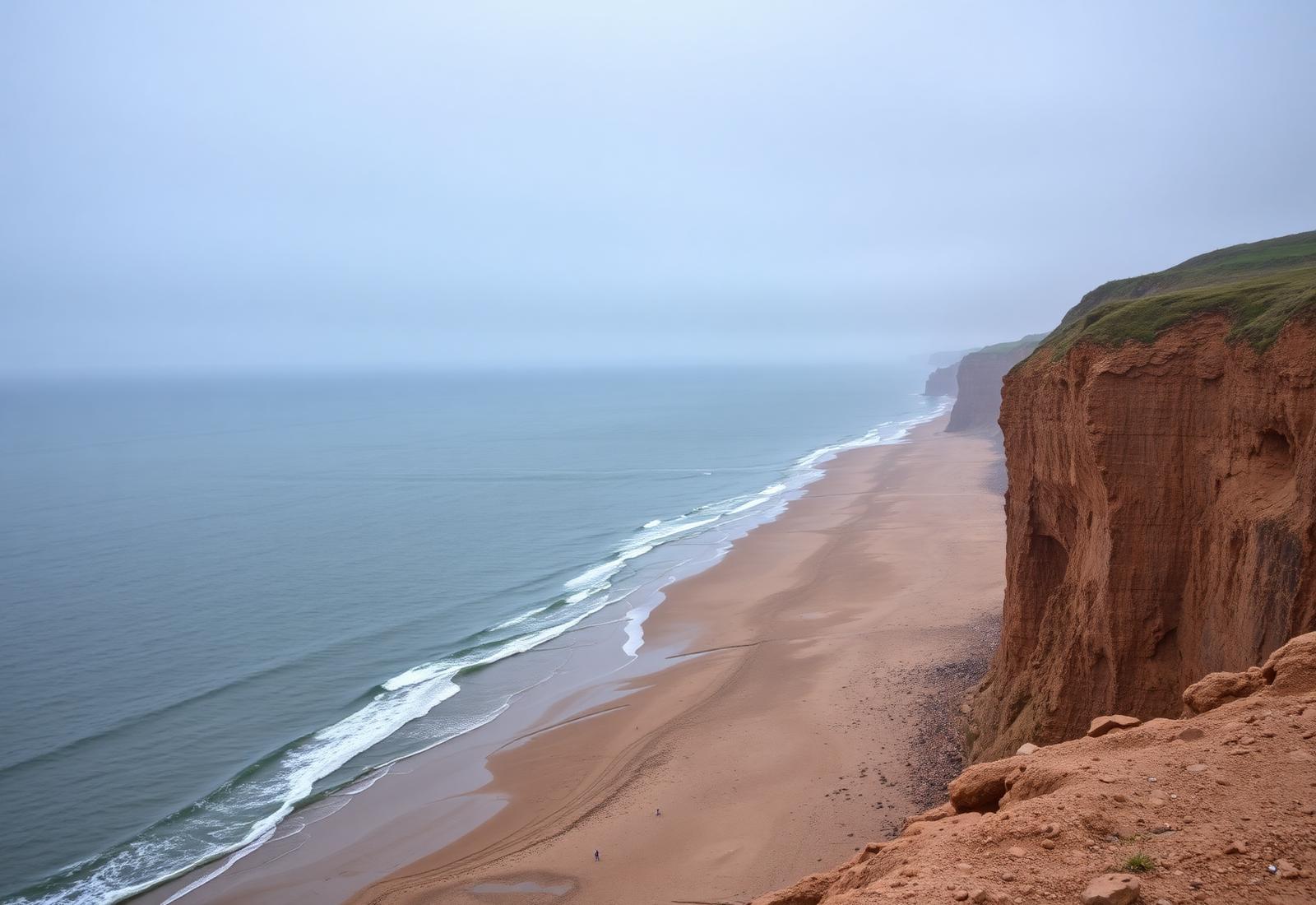
8,200 km of European sandy beaches are already governed by erosion dynamics. Wetlands, deltas, estuarine systems and low-lying settlements are particularly exposed to flooding, salinisation and infrastructure damage under current trajectories.
- 04
Tourism dependency
Coastal tourism accounts for 54% of direct employment and 29% of gross value added in the entire European Blue Economy. In Cyprus, Croatia and Malta, foreign tourists account for over 90% of coastal visitors. Such dependence generates both resilience and structural fragility.
- 05
Social vulnerability and demographic change
Coastal populations — fishermen, hoteliers, seasonal workers, long-term residents, young people facing uncertain futures — experience environmental and economic transformation unevenly. Place-based distress in the face of landscape change is now documented in coastal communities across Europe as solastalgia.
- 06
Territorial resilience
Economic modelling under RCP8.5/SSP5 scenarios suggests some European coastal regions could face GDP losses between 9.56% and 20.84% without significant adaptation. Building resilience requires comparative, interdisciplinary and community-centred knowledge that policy currently lacks.

From the manifesto
“For communities whose economic identity is anchored in coastal tourism, these physical changes are not abstract. They translate into shorter beach seasons, degraded water quality, damaged infrastructure, and the progressive transformation of the landscape that defines the value and identity of their place.”